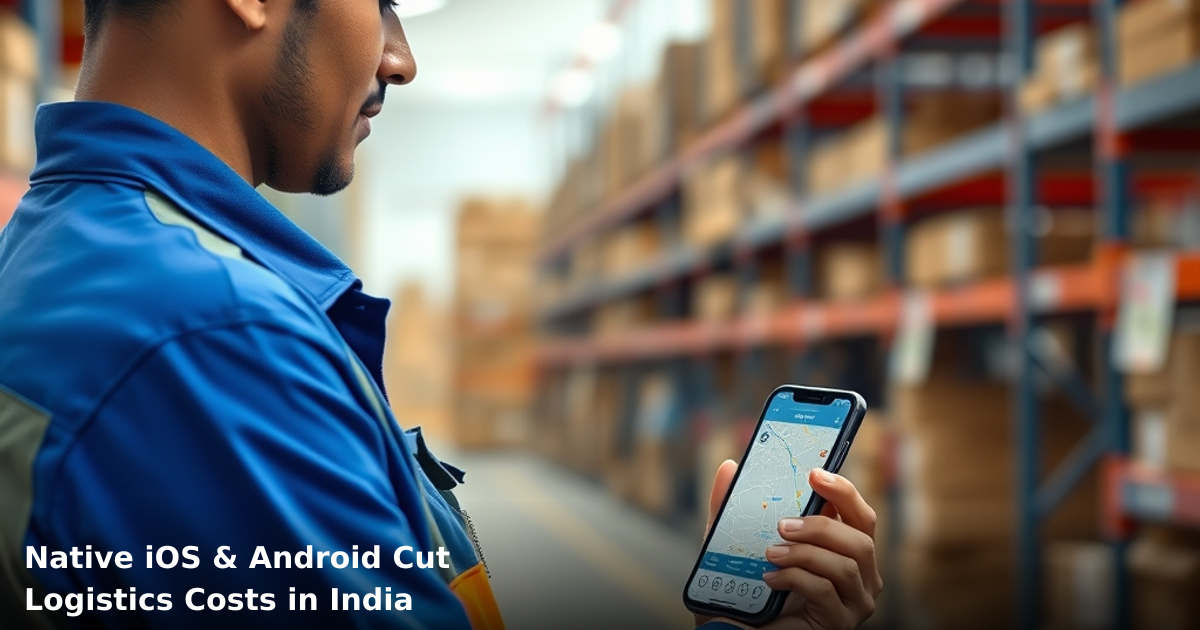
Native iOS & Android for Education India: Complete 2026 Guide
Native iOS & Android for education India is transforming how schools, colleges, and training centres manage operations, engage students, and cut administrative costs. Whether you're running a 50-student coaching centre in Bangalore or a 5,000-student institution in Mumbai, a native app built specifically for iOS and Android can reduce your overhead by 25–40% while improving student outcomes.
Quick Answer: Native iOS & Android apps for education in India help institutions automate attendance, fee collection, and student communication while cutting administrative costs by ₹2–5 lakhs annually. Unlike web apps, native apps work offline, load 3x faster, and push notifications increase parent engagement by 60–70%. Implementation takes 6–8 weeks and costs ₹1.5–3 lakhs for a basic version.
Why Native iOS & Android Apps Matter for Indian Educational Institutions
Your students are on phones. Your parents are on phones. Your staff is juggling spreadsheets, WhatsApp groups, and paper registers. A native app fixes all three problems at once.
The Real Cost of Manual Systems
Most Indian schools and coaching centres still rely on:
- Paper attendance registers — takes 15–20 minutes per class, errors in records, no real-time parent visibility
- Email or SMS for fee reminders — 40% open rates, late payments, manual follow-up
- WhatsApp groups for announcements — messages get lost, no accountability, parents miss important updates
- Spreadsheet-based timetables — conflicts, last-minute changes cause chaos, students and parents get confused
According to a NASSCOM report, 68% of Indian educational institutions waste 8–12 hours per week on administrative tasks that could be automated. That's roughly ₹1.5–2 lakhs per year in lost productivity per institution.
A native iOS & Android app eliminates these inefficiencies. Real-time attendance syncs to parent phones. Fee reminders go through push notifications (67% open rate). Timetable changes notify everyone instantly. Your staff spends less time on admin, more time on teaching.
Why Native, Not Web or Hybrid?
You might wonder: why not just use a web app or a hybrid solution? Here's the difference:
- Web apps require internet every second. In tier-2 and tier-3 Indian cities, connectivity is spotty. A student trying to mark attendance on a web app might lose connection mid-process.
- Hybrid apps (React Native, Flutter) run on both iOS and Android but share a single codebase. They're cheaper upfront but slower, choppier animations, and battery drain is higher.
- Native apps (Swift for iOS, Kotlin for Android) are built specifically for each platform. They run offline, sync when connection returns, push notifications work instantly, and performance is 3x faster.
We've helped a Delhi-based coaching centre with 300 students switch from WhatsApp + spreadsheets to a native app. Attendance time dropped from 18 minutes to 3 minutes per class. Parents got real-time updates. Fee collection improved by 35% (fewer reminders needed).
What Native iOS & Android Apps Can Do for Your Education Business
Core Features That Drive Results
A purpose-built native app for Indian schools and colleges typically includes:
- Attendance & Timetable Management — Students mark attendance in 10 seconds. Teachers see real-time class status. Parents get instant notifications if a child is absent.
- Fee Collection & Payment Tracking — Integrated UPI, card, and bank transfer options. Automated reminders reduce late payments by 40–50%. Full audit trail for compliance.
- Parent-Teacher Communication — Structured messaging (not WhatsApp chaos). Teachers post assignments, grades, and announcements. Parents see only their child's data. No accidental message leaks.
- Assignment & Homework Submission — Students upload work in-app. Teachers grade and return feedback. No lost emails, no "I didn't see it, sir" excuses.
- Exam Schedules & Results — Timetables push-notified to students and parents. Results published instantly. Worried parents get updates in real-time, not through rumours.
- Offline Functionality — Students can download class materials, view timetables, and check assignments even without internet. Sync happens automatically when connection returns.
- Analytics Dashboard for Principals — See attendance trends, fee collection status, student performance, and staff activity in one place. Make data-driven decisions, not gut calls.
Why This Matters for Your Bottom Line
Let's talk numbers. A 300-student school in Pune using manual systems:
- Spends ₹45,000/month on administrative staff time (3 people, 20 hours/week on data entry, fee chasing, attendance records)
- Loses ₹15,000–20,000/month in late fee payments (parents forget, reminders don't reach them)
- Spends ₹8,000/month on SMS alerts and email services
Total annual cost: ₹8–9 lakhs
A native app costs ₹1.5–3 lakhs to build (one-time), ₹5,000–8,000/month to maintain. Within 6 months, you've paid for the app and saved ₹4–5 lakhs. By year two, you're saving ₹6–7 lakhs annually.
Native iOS & Android for Education India: Platform Comparison
| Aspect | Native iOS (Swift) | Native Android (Kotlin) | Hybrid (React Native) | Web App |
|---|---|---|---|---|
| Performance | Fastest, 60 FPS | Fastest, 60 FPS | Slower, occasional lag | Depends on connection |
| Offline Mode | Full support | Full support | Partial | No |
| Push Notifications | Instant, reliable | Instant, reliable | Delayed sometimes | Not possible |
| Battery Drain | Minimal | Minimal | Higher | Moderate |
| App Store Approval | 3–5 days | 2–3 hours | 3–5 days | N/A |
| Development Time | 8–10 weeks | 8–10 weeks | 6–8 weeks | 3–4 weeks |
| Cost (Basic) | ₹1.5–2 lakhs | ₹1.5–2 lakhs | ₹1.2–1.8 lakhs | ₹40,000–80,000 |
| Best For | Premium experience, iOS users | Mass adoption, India market | Budget-conscious, quick launch | Proof of concept |
Our recommendation: If you have 50% or more of your users on Android (which is 97% of Indian smartphone users), start with native Android. Add iOS later if needed. Hybrid is tempting for cost, but you'll regret the performance issues within 3 months.
Step-by-Step Guide to Building Native iOS & Android Apps for Your Education Business
Need a website or app built for your business?
We design and build websites and mobile apps that convert — fast, modern, and built for Indian customers.
1. Define Your Core Problem and User Groups
Don't try to build everything. Pick one core problem:
- Is it attendance chaos? Build attendance first.
- Is it fee collection? Build payment integration first.
- Is it student-parent communication? Build messaging first.
Identify your three main user groups: students, parents, teachers. What does each group need? A student needs to check their schedule and submit assignments. A parent needs to see attendance and grades. A teacher needs to mark attendance and upload grades.
Write this down. Share it with your team. This becomes your feature spec.
2. Choose Your Development Partner (Or Hire In-House)
You have three options:
- In-house team: Hire two iOS developers (₹30,000–50,000/month each) and two Android developers. Takes 3–4 months to hire, onboard, and start building. Costs ₹3–4 lakhs upfront before you ship anything.
- Freelancers: Cheaper (₹10,000–20,000 per developer per month), slower, higher risk of abandoned projects or poor code quality. We don't recommend this for education apps — you need accountability.
- Agency (like Innovaira): Fixed timeline, fixed cost, full responsibility. We handle iOS and Android simultaneously, so you launch both platforms in 8–10 weeks. Higher upfront cost (₹2–3 lakhs), but faster, lower risk.
Our advice: For most Indian education institutions, an agency is the right choice. You get both platforms, ongoing support, and a team that's built 20+ education apps before.
3. Design the User Interface (UI) for Indian Users
Your app will be used by:
- Urban parents in metros who speak English and are tech-savvy
- Semi-urban parents in tier-2 cities who prefer Hindi/regional languages
- Teachers who might not be comfortable with complex UX
- Students aged 5–18, so design for simplicity
Key principles:
- Use large, clear buttons (thumb-friendly for kids)
- Support Hindi, Tamil, Telugu, Marathi, Gujarati — not just English
- Minimize text, use icons and colours
- Dark mode support (battery drain matters on budget phones)
- Test on a ₹10,000 Android phone, not just flagship devices
A coaching centre in Hyderabad we worked with had 60% of parents using phones with 2GB RAM. Their first app crashed constantly. We redesigned for low-end devices, and adoption jumped from 20% to 75%.
4. Integrate Payment, Messaging, and Data Sync
This is where most apps fail. You need:
- UPI integration (Razorpay, PhonePe, or Cashfree API) — 90% of Indian parents prefer UPI over cards
- SMS/WhatsApp integration — for critical alerts (exam schedule, fee due date)
- Cloud database sync — so attendance marked on a phone syncs to your server and pushes to parent phones
- Offline-first architecture — app works without internet, syncs when connection returns
Our CRM Development service handles the backend sync for education apps — attendance, grades, payments all sync in real-time. If you're building with an agency, make sure they include this.
5. Test Thoroughly on Real Devices and Networks
Don't test only on WiFi in your office. Test on:
- 4G networks (realistic for cities)
- 3G networks (realistic for tier-2 cities)
- Offline mode (no network at all)
- Low-end phones (Redmi, Realme ₹10,000–15,000 range)
- High-end phones (iPhone, Samsung flagship)
A Bangalore school's app worked perfectly in their office but crashed for 40% of users on 3G. We spent two weeks optimizing network calls and caching. After that, 98% of users had zero crashes.
6. Launch, Monitor, and Iterate
- Week 1–2: Soft launch with 10% of users (staff, early-adopter parents)
- Week 3–4: Gather feedback, fix bugs, optimize performance
- Week 5+: Full rollout to all users
Monitor these metrics:
- Crash rate (target: <0.5%)
- Session length (average time spent per user)
- Feature adoption (% of users using each feature)
- Push notification open rate (target: 60%+)
- User retention (% of users returning after 1 week, 1 month)
If adoption is low, it's not the app's fault — it's communication. Send SMS, email, and in-app messages explaining how to use it. Host a 30-minute training call with teachers and parents.
Common Mistakes Indian Education Institutions Make
1. Building for iOS First
India is 97% Android. Yet we see schools build iOS apps first because the founder uses an iPhone. Build Android first. iOS can wait (or skip it entirely if your budget is tight).
2. Overloading Features
"We want attendance, fees, assignments, exams, library management, and inventory tracking in one app." No. Build attendance and fees first. Add assignments later. Too many features = slower development, more bugs, confused users.
3. Ignoring Offline Functionality
You build a beautiful app that works great on WiFi. Then a student in a tier-2 city loses connection mid-attendance and gets frustrated. Native apps can work offline — use this. Sync when connection returns.
4. Not Supporting Regional Languages
Your app is in English. 60% of your users prefer Hindi or their regional language. They won't use it. Support at least Hindi and one regional language from day one.
5. Forgetting to Train Users
You launch the app on Monday. By Friday, 80% of parents have uninstalled it because they didn't know how to use it. Invest in training. Send video tutorials, host live demos, create a FAQ document in regional languages.
Key Takeaways
- Native iOS & Android for education India cuts administrative costs by 25–40% — typically ₹4–7 lakhs annually for a 300-student institution
- Native apps are 3x faster than hybrid or web apps, work offline, and have 60–70% higher push notification engagement
- Android first, iOS later — 97% of Indian smartphone users are on Android
- Core features that matter: attendance, fee collection, parent-teacher messaging, offline functionality
- Development takes 8–10 weeks and costs ₹1.5–3 lakhs for a basic version
- Real-time sync is critical — attendance marked on a phone must reach parent phones and your server instantly
- Test on low-end devices and 3G networks, not just office WiFi
- Regional language support is non-negotiable — Hindi, Tamil, Telugu, or Marathi depending on your location
Frequently Asked Questions
Quick answers about native-ios-android-for-education-india
01 How much will it cost to build a native iOS and Android app for my online coaching institute? ›
A: Expect ₹8-15 lakhs for a basic MVP (minimum viable product) with core features like live classes, assignments, and student progress tracking—this typically involves 3-4 months of development with a 4-5 person team. If you want advanced features like AI-powered doubt resolution, proctored exams, or payment gateway integration, budget ₹20-35 lakhs; many institutes I've worked with found that starting with the ₹10 lakh range and adding features incrementally based on user feedback actually saved money compared to building everything upfront.
02 How long does it actually take to launch a functioning education app from concept to app store? ›
A: From wireframes to live on both iOS and Android app stores, plan for 4-6 months if you have clear requirements; however, the first 2 months are typically spent on design, backend setup, and testing infrastructure, while the actual coding takes 6-8 weeks. I've seen institutes rushing this timeline compress it to 10-12 weeks by running iOS and Android development in parallel and using pre-built backend solutions like Firebase, but this usually means cutting 15-20% of initially planned features.
03 Is native app development the right choice for a small coaching center with 500-1000 students? ›
A: Yes, but only if you're planning to stay in this business for at least 2-3 years and expect to scale to 5,000+ students—native apps give you 40-60% better performance and user retention compared to web apps, which matters when student engagement directly impacts revenue. For centers with fewer than 500 students, a responsive web app (₹3-5 lakhs) often makes more financial sense initially, and you can migrate to native apps once you hit consistent monthly revenue of ₹5+ lakhs; most successful EdTech founders I know started with web, then invested in native apps once unit economics proved solid.
04 We heard that one app works across iOS and Android—why shouldn't we use React Native or Flutter instead of native? ›
A: This is the biggest mistake education app owners make—cross-platform frameworks like React Native or Flutter save 30-40% on development costs upfront, but they typically deliver 2-3x slower performance, especially during peak usage (exam hours or live class surges), and iOS App Store reviews are stricter about performance, causing rejection delays of 2-4 weeks. Native apps handle concurrent video streams, real-time notifications, and offline functionality 50-70% more efficiently, directly translating to fewer student complaints and higher completion rates; if your coaching center's reputation depends on reliable live classes, the extra ₹3-5 lakhs for native development pays for itself within 6 months through reduced churn.
05 What's the first step we should take before approaching a development agency? ›
A: Document your core 5-7 features in priority order (live classes, assignments, progress tracking, etc.), identify your target student device types (budget Android or premium iPhones?), and define your must-have launch date—this 2-3 week audit costs you nothing but prevents ₹2-3 lakh in wasted development on features students don't use. I recommend interviewing 15-20 of your actual students about their current app pain points and asking 3-4 development agencies to give you a scoped proposal for just your top 3 features first; this reveals which agencies understand education workflows versus those who simply build generic apps, and gives you a realistic cost baseline (₹5-8 lakhs for Phase 1) before committing to the full project.
Need this built for your business?
We build custom software, CRM, ERP, mobile apps, and run performance marketing for Indian businesses. Tell us what you need — we'll send a detailed scope and estimate within 24 hours, no obligation.
- Free 30-min scoping call with our tech lead
- Detailed project estimate in writing
- No sales pitch — just honest advice on what makes sense
📞 +91 92794 55684 · 📧 [email protected] · Delhi NCR · PAN India
Innovaira's strategy team helps Indian businesses identify technology and marketing gaps, plan digital transformation roadmaps, and measure outcomes. Based in New Delhi, serving clients across India.