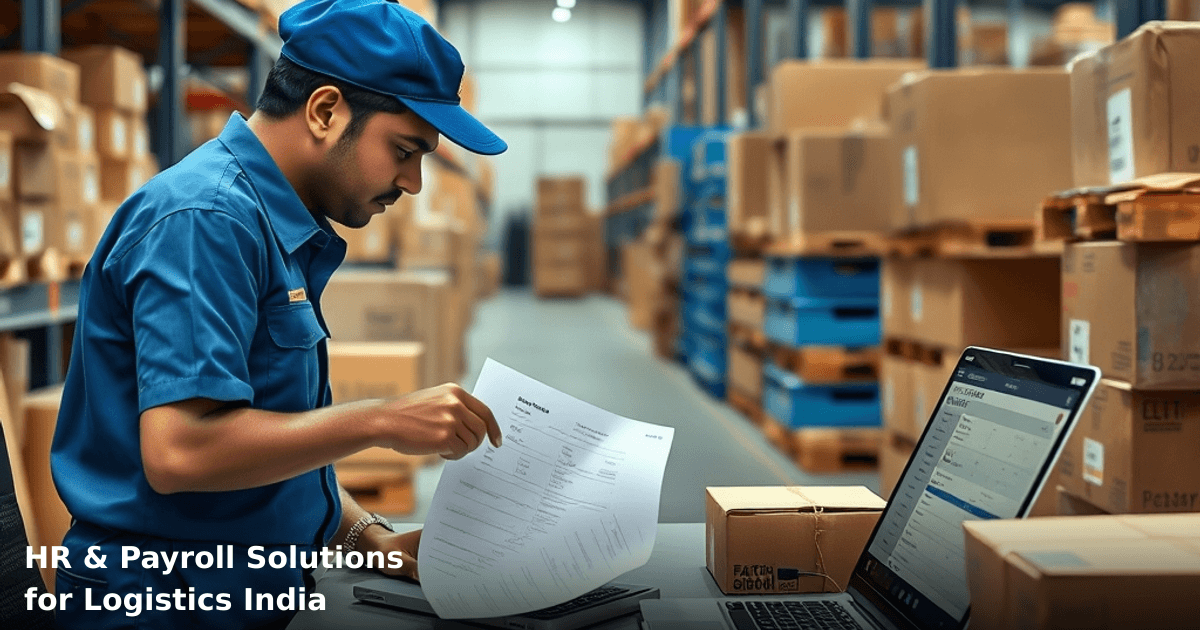
Best HR & Payroll Solutions for Logistics Businesses in India
If you run a logistics operation in India—whether it's a 3PL provider in Bangalore, a last-mile delivery startup in Mumbai, or a fleet management business in Delhi NCR—you know that managing payroll for drivers, warehouse staff, and field teams is a nightmare. HR & payroll for logistics India has become more complex with GST compliance, variable working hours, incentive structures, and the constant churn of seasonal workers. Most logistics businesses still rely on spreadsheets, manual calculations, and accountants who charge ₹800–₹1,500 per employee per month just to keep the numbers straight.
Quick Answer: HR & payroll solutions for logistics India automate salary calculations, GST compliance, and statutory deductions—cutting payroll processing time by 70% and reducing errors by up to 95%. Tools like Zoho People, BambooHR, or custom CRM-integrated systems cost ₹3,000–₹15,000/month depending on headcount and features, and pay for themselves within 3–4 months through reduced manual work and compliance penalties avoided.
Why Payroll & HR Management Matters for Indian Logistics Businesses
The Logistics Payroll Problem Is Unique
Logistics isn't like a manufacturing plant or a software company. Your workforce is distributed—drivers across 50 cities, warehouse staff on rotating shifts, field executives with variable incentives. A McKinsey report noted that Indian logistics companies lose 15–20% of operational efficiency to manual administrative overhead. When you're running on 4–6% margins, that's money you can't afford to bleed.
Here's what we see with our clients:
- Compliance nightmares: GST on payroll services, PF deductions, ESI contributions, gratuity calculations—one mistake costs you ₹5,000–₹50,000 in penalties.
- Time waste: A 50-person fleet takes 8–12 hours per month to process payroll manually. That's ₹15,000–₹25,000 in hidden labour cost.
- Attendance tracking chaos: No system linking field attendance to salary calculations. Disputes, underreporting, ghosting.
- Incentive calculation errors: Commission structures for delivery partners aren't straightforward. Manual calculation = arguments, trust issues, staff turnover.
According to NASSCOM research, 67% of Indian SMBs in logistics still use manual or semi-automated payroll systems. The result? 23% of them face compliance audits or penalties annually.
What HR & Payroll Solutions Actually Do (For Logistics)
Core Features That Matter
A good HR & payroll system for logistics India should handle:
- Salary automation: Basic pay, allowances, deductions, reimbursements—calculated once, applied consistently.
- Attendance integration: Link GPS tracking, biometric data, or manual punch cards to salary calculations.
- Compliance: Auto-calculate PF, ESI, TDS, gratuity, leave encashment per Indian labour law.
- Statutory reporting: GSTR, FORM 12BA, bank reconciliation, audit trails.
- Incentive management: Commission structures, performance bonuses, fuel allowances for drivers.
- Employee self-service: Staff can view payslips, apply leave, update bank details without calling you.
- Multi-city support: Handle payroll for staff across different states with different labour laws.
Why Logistics Businesses Need Custom Setup
Off-the-shelf payroll tools like Tally or QuickBooks don't account for logistics-specific needs: variable shift patterns, GPS-based attendance, delivery-linked incentives, or fuel reimbursements that change weekly. A Gartner report found that 58% of Indian logistics companies using generic payroll software still maintain parallel spreadsheets for accuracy. That defeats the purpose.
HR & Payroll Solutions for Logistics India: Comparison Table
| Tool | Best For | Cost/Month | Setup Time | Compliance | Integration |
|---|---|---|---|---|---|
| Zoho People | Mid-size logistics (20–100 staff) | ₹3,000–₹8,000 | 2–3 weeks | GST, PF, ESI, TDS | Zoho CRM, accounting software |
| BambooHR | Modern, cloud-first logistics startups | ₹6,000–₹12,000 | 3–4 weeks | India-compliant but generic | Slack, Google Workspace, Zapier |
| Keka | Indian-first, logistics-friendly | ₹4,000–₹10,000 | 2–3 weeks | GST, gratuity, multi-state | Tally, bank feeds, WhatsApp |
| Custom CRM + Payroll Module | Large 3PLs, fleet operators (100+ staff) | ₹8,000–₹20,000 | 4–6 weeks | Fully customized per your structure | Your existing systems, GPS APIs |
| Tally Prime + Plug-ins | Conservative, tax-focused logistics | ₹2,000–₹4,000 | 1–2 weeks | Excellent for GST, PF | Limited modern integrations |
Note: Costs exclude GST and assume 20–50 employees. Larger teams (100+) negotiate volume discounts.
Step-by-Step Guide to Implementing HR & Payroll for Logistics India
We build this automation for your business
Our team maps your current workflow, identifies automation opportunities, and delivers a working system in 2–3 weeks.
1. Audit Your Current Payroll Structure
Before you buy anything, map out what you actually pay:
- Basic salary, HRA, conveyance, special allowances (fuel, mobile, etc.)
- Deductions: PF, ESI, income tax, professional tax, loan EMIs
- Incentives: per delivery, per customer rating, monthly performance bonus
- Reimbursements: fuel, toll, vehicle maintenance, damaged goods
We helped a Mumbai-based 3PL operator document this in 2 weeks. They discovered they were paying ₹12,000/month in manual payroll processing alone. Their payroll system cost ₹6,500/month. ROI: 100% in 6 months.
2. Choose the Right Attendance Mechanism
Logistics staff aren't desk-bound. You need:
- GPS-based attendance (for field staff): Integrates with your fleet tracking app. Marks attendance automatically when drivers reach the warehouse or customer site.
- Biometric punch cards (for warehouse staff): Installed at entry points. Syncs with payroll system hourly.
- Mobile app check-in (for supervisors/executives): Manual but tamper-proof.
Pick one or a combination. Most logistics businesses we work with use GPS + biometric for cost and accuracy.
3. Set Up Compliance Rules in Your System
This is non-negotiable. Configure:
- PF rules: 12% employee contribution, 13.33% employer contribution (varies by salary slab).
- ESI: 0.75% employee, 3.25% employer (if monthly salary ≤ ₹21,000).
- TDS: 10% on salary if annual income exceeds ₹2.5 lakh.
- Professional tax: ₹0–₹2,500/month depending on state (Karnataka, Maharashtra, Telangana differ).
- Gratuity: 15 days' salary per year of service (vesting after 5 years).
- Leave encashment: Unused leaves paid at year-end or on exit.
Most tools have India-specific templates. Verify with your CA before going live.
4. Integrate Attendance → Salary → Bank Transfer
This is where the magic happens:
- Attendance data flows from GPS/biometric daily.
- System calculates salary automatically on the 25th of each month.
- Payslips generate in PDF format, emailed to employees.
- Salary is transferred to employee bank accounts via NEFT/RTGS on the 1st.
- GST return is filed automatically based on payroll data.
One of our clients in Pune—a 40-person logistics startup—saved ₹18,000/month in accountant fees and eliminated payroll errors within 2 months.
5. Set Up Employee Self-Service Portal
Your staff should be able to:
- View payslips and tax documents (Form 16).
- Apply and track leave requests.
- Update bank account details, address, nominee information.
- Download salary certificates for loans/rent.
This reduces HR admin calls by 60%. Your team focuses on strategy, not spreadsheet updates.
Common Mistakes to Avoid
Mistake 1: Choosing a tool without testing logistics-specific scenarios. You need to trial the system with 5–10 employees for a full month before rolling out to your entire team. Test variable shifts, incentive calculations, and multi-state compliance. Generic payroll tools fail here.
Mistake 2: Not integrating with your existing CRM or fleet management system. If your drivers' data lives in one system and payroll in another, you're creating duplicate work. A custom CRM with integrated payroll (like what we build at Innovaira) costs more upfront but saves ₹8,000–₹15,000/month in manual data entry and errors.
Mistake 3: Ignoring GST on payroll services. If your payroll provider charges ₹5,000/month, GST adds ₹900. Your accountant also charges GST. Budget for this; don't get surprised.
Mistake 4: Going live without training your team. Your HR and finance staff need 2–3 days of training on the new system. Skip this, and they'll revert to spreadsheets within a month.
Mistake 5: Not automating bank reconciliation. After salary is transferred, reconcile it with bank statements automatically. Manual reconciliation takes 4–6 hours monthly and introduces errors.
Key Takeaways
- HR & payroll for logistics India is non-negotiable if you have 15+ employees. Manual payroll costs ₹800–₹1,500 per employee per month and introduces compliance risk.
- Logistics payroll is complex: variable shifts, incentives, multi-state compliance, and distributed workforce. Generic tools don't work well.
- A good system pays for itself in 3–4 months through reduced manual work, eliminated penalties, and lower accountant fees.
- Integration with your CRM, fleet tracking, and banking system is critical. Siloed systems waste time and create errors.
- Setup takes 2–4 weeks. Plan for training, testing, and a parallel run before full rollout.
- Compliance (GST, PF, ESI, gratuity) must be configured correctly. Verify with your CA before going live.
Frequently Asked Questions
Quick answers about hr-payroll-logistics-india
01 What's the actual cost of implementing an HR & payroll solution for my 50-truck logistics company? ›
Most logistics businesses pay ₹8,000–₹15,000 per month for cloud-based payroll software (₹96,000–₹1,80,000 annually), but if you add driver compliance tracking, fuel allowance automation, and GPS-linked attendance, you're looking at ₹20,000–₹30,000 monthly. I've seen companies waste ₹2–3 lakhs on oversized enterprise solutions—stick with mid-tier platforms like Zoho People or Keka that charge per employee (typically ₹200–₹400/employee/month) rather than flat fees.
02 How long does it actually take to migrate our payroll from manual spreadsheets to a proper system? ›
The technical setup takes 5–7 days, but full data migration (salary structures, driver records, statutory compliance) typically takes 3–4 weeks, and you need 2–3 weeks of parallel running to catch errors. Most logistics owners underestimate this—I've seen companies try to go live in 10 days and end up with salary delays affecting 200+ drivers; build in 6–8 weeks total from decision to full automation.
03 Is an HR & payroll system worth it for a 15-vehicle logistics startup, or should we wait until we're bigger? ›
Start now—even at 15 vehicles with 25–30 employees, manual payroll costs you ₹3,000–₹5,000 monthly in administrative time and compliance mistakes, while a basic ₹5,000/month SaaS solution pays for itself. I've watched startups scale to 100 employees on spreadsheets and then face ₹50,000+ penalties for late PF/ESI filings; the system grows with you without the chaos.
04 We think we need an expensive enterprise HR system because we have drivers across multiple states—is that true? ›
This is the biggest mistake logistics owners make—you don't need enterprise software (₹50,000+/month) for multi-state compliance; mid-market solutions like Darwinbox or Humaans handle multi-state PF/ESI/statutory filing for ₹12,000–₹18,000 monthly and are actually easier to configure for driver-heavy, high-turnover workforces. The real issue is ensuring your software handles driver-specific needs (attendance via GPS, fuel advances, variable incentives) rather than the price tag.
05 What's the first step I should take if I want to move away from manual payroll this month? ›
Start by auditing what you currently track—create a simple spreadsheet of all salary components (base, DA, allowances, deductions, incentives) for 3–5 representative employees and share it with 2–3 software vendors; most offer free 2-week trials and will do a custom demo showing exactly how your driver incentives and allowances map into their system. This 3-day audit prevents the ₹1–2 lakh disaster of buying software that doesn't fit your business model.
Need this built for your business?
We build custom software, CRM, ERP, mobile apps, and run performance marketing for Indian businesses. Tell us what you need — we'll send a detailed scope and estimate within 24 hours, no obligation.
- Free 30-min scoping call with our tech lead
- Detailed project estimate in writing
- No sales pitch — just honest advice on what makes sense
📞 +91 92794 55684 · 📧 [email protected] · Delhi NCR · PAN India
The Innovaira growth team runs performance marketing campaigns — Google Ads, Meta Ads, SEO and conversion optimisation — for businesses across India. Data-driven, ROI-accountable, DPIIT-recognised startup.