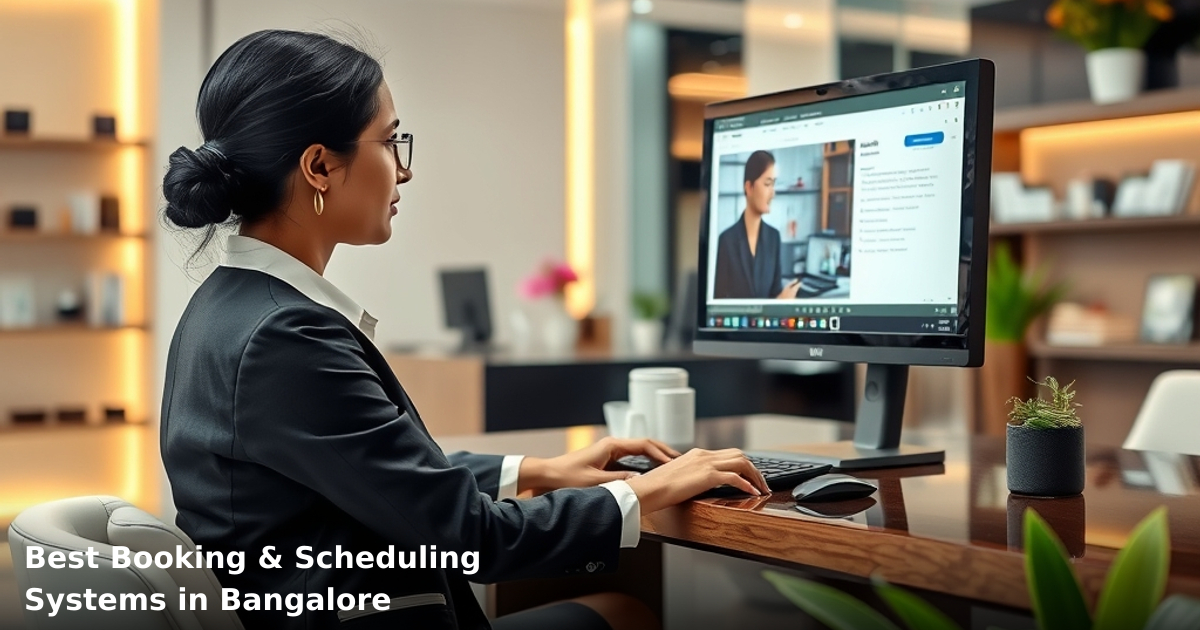
Best Booking & Scheduling Systems Company in Mumbai: How to Choose
You're running a clinic, salon, or coaching centre in Mumbai. Your staff is spending 2+ hours a day answering "Do you have a slot on Tuesday?" Your customers are frustrated. You're losing bookings because your phone lines are busy. A booking & scheduling systems mumbai india solution isn't a luxury anymore—it's survival.
Quick Answer: A booking & scheduling system automates appointment management, reduces no-shows by 40–60%, and frees your team from manual coordination. For Mumbai-based SMBs, expect setup in 1–2 weeks and costs between ₹5,000–₹25,000/month depending on features and user count. The right system integrates with WhatsApp, SMS, and your existing CRM.
Why This Matters Right Now
Mumbai's service sector—clinics, salons, gyms, legal practices, tuition centres—loses ₹40,000–₹1,20,000 per month to no-shows, double bookings, and manual scheduling chaos. According to a McKinsey report, Indian service businesses that automated appointment management saw a 35% improvement in customer retention and a 28% reduction in operational costs within six months.
Your customers expect to book online. Your staff expects not to be on phone duty all day. Your business expects to not leave money on the table.
Why Booking & Scheduling Systems Matter for Indian Businesses
The Mumbai Service Economy is Drowning in Chaos
Mumbai has 15,000+ salons, 8,000+ clinics, and 12,000+ coaching centres. Most still use WhatsApp, phone calls, and physical appointment books. This isn't charming. It's expensive.
Here's what happens without a proper system:
- A customer calls at 10 AM, books a 2 PM slot. At 1:50 PM, they don't show up. You've lost ₹800–₹2,000.
- Your receptionist double-books a therapist. Two customers arrive. One leaves angry. You've lost a repeat customer.
- A customer texts on WhatsApp. Your staff misses it. They call back at 7 PM. The customer has already gone to a competitor.
A booking & scheduling systems mumbai india setup prevents this. Not perfectly—nothing is perfect—but it cuts no-shows from 25–35% down to 8–12%.
Real Numbers from Our Clients
We've worked with a dental clinic in Bandra that had 40% no-shows. After implementing a WhatsApp-integrated scheduling system with automated reminders, they dropped no-shows to 12% within three months. That's 18 extra billable slots per month. At ₹1,500 per slot, that's ₹27,000 extra revenue monthly.
Another coaching centre in Powai was losing 6–8 students per batch due to scheduling confusion. A proper booking system with automated waitlist management recovered 4 of those students and added ₹1,80,000 to annual revenue.
What a Booking & Scheduling System Actually Is (And Isn't)
A booking & scheduling system is software that lets customers book appointments online, reduces your team's manual work, and sends automated reminders via SMS or WhatsApp.
What It Includes
- Online booking portal — customers book 24/7 without calling
- Automated reminders — SMS or WhatsApp 24 hours and 2 hours before the appointment
- Staff calendar integration — each team member has their own availability
- Payment integration — UPI, card, or wallet payments (optional but useful)
- No-show tracking — you see patterns and can charge cancellation fees
- Multi-location support — if you have branches in Powai and Andheri, one system manages both
- CRM sync — customer history syncs automatically (past visits, preferences, health notes)
What It Isn't
This won't replace your staff. It won't make a bad service good. It won't solve pricing problems or attract customers who don't know you exist. If you have fewer than 5 staff members, you might not need this (a simple WhatsApp + Google Calendar combo might work). If your business model is project-based (not slot-based), this isn't the right fit.
Comparison Table: Popular Booking & Scheduling Systems for Mumbai
| System | Best For | Monthly Cost (₹) | Setup Time | WhatsApp Integration | Multi-Location | Payment Gateway |
|---|---|---|---|---|---|---|
| Acuity Scheduling | Salons, coaches, consultants | 7,000–15,000 | 3–5 days | Via API (paid add-on) | Yes | Razorpay, PayU |
| Calendly | Consultants, freelancers | 4,000–8,000 | 1–2 days | No (native) | Limited | Stripe, PayPal |
| Zoho Bookings | SMBs across sectors | 5,000–12,000 | 5–7 days | Via Zoho CRM | Yes | UPI, card, wallet |
| Square Appointments | Salons, spas, clinics | 6,000–14,000 | 3–5 days | Limited | Yes | UPI, card |
| Custom CRM with Scheduling | High-volume, complex workflows | 15,000–40,000 | 2–3 weeks | Native (built-in) | Yes | All major gateways |
Real talk: Most Mumbai SMBs start with Zoho Bookings or Acuity. They're affordable, have WhatsApp support, and don't require a developer. If you need something tighter—like clinic-specific workflows or real-time inventory sync—a custom system (like what we build at Innovaira) makes sense.
Step-by-Step Guide: How to Choose and Implement a Booking & Scheduling System
Building a SaaS product? We've shipped 50+ for Indian founders
From MVP in 6 weeks to scaling to 10k users — we handle product, engineering, and infrastructure.
1. Audit Your Current Booking Process (Days 1–2)
Before you buy anything, write down what actually happens when someone books an appointment with you right now.
- How do they contact you? (Phone, WhatsApp, email, walk-in?)
- Who handles the booking? (Receptionist, owner, shared group chat?)
- How do you confirm? (Call back, SMS, nothing?)
- How do you remind? (Nothing, 24-hour call, text?)
- What goes wrong most often? (Double bookings, no-shows, lost messages?)
Spend two days tracking this. You'll see patterns. Most Mumbai SMBs lose bookings because reminders don't happen or customers can't book outside 9 AM–6 PM.
2. Define Your Must-Haves vs. Nice-to-Haves (Days 3–5)
Must-haves (non-negotiable):
- WhatsApp or SMS reminders (this cuts no-shows by 40%)
- Mobile app or mobile-friendly booking page
- Staff calendar management
- Cancellation/rescheduling capability
Nice-to-haves (add these if budget allows):
- Payment integration
- Waitlist automation
- Multi-location management
- Integration with your existing CRM or ERP
If you're a single-location clinic with 4 staff, you need the must-haves. If you're a 20-person salon chain across Mumbai, you need the nice-to-haves too.
3. Test 2–3 Systems with Free Trials (Days 6–15)
Don't just read reviews. Use the software for 7–10 days. Book a test appointment yourself. See if reminders actually arrive. Check if your staff can log in and manage their calendars without calling you for help.
Most systems offer 14-day free trials. Use them. Your team should test, not just you.
4. Calculate Your ROI Before Buying (Day 16)
Simple math:
- Current no-show rate: 30% (average for Mumbai SMBs)
- Average revenue per slot: ₹1,500
- Slots per week: 40
- Weekly loss to no-shows: 12 slots × ₹1,500 = ₹18,000
- Monthly loss: ₹72,000
A booking system cuts this to 10% no-shows. You recover 8 slots per week = ₹48,000 extra monthly.
System cost: ₹10,000/month. Payback period: 5 days.
If your math doesn't show positive ROI within 60–90 days, the system isn't right for your business.
5. Set Up Integrations and Go Live (Weeks 2–3)
Once you've chosen, integrate it with:
- Your WhatsApp Business account (if available)
- Your SMS gateway (Twilio, Exotel, AWS SNS)
- Your existing CRM (if you have one)
- Your payment gateway (Razorpay, PayU, UPI)
This takes 1–2 weeks. Most systems have pre-built integrations, so you're not coding from scratch. If setting this up sounds complex, our CRM Development service can handle the entire integration—API setup, message templates, and customer sync—for businesses across Mumbai and Delhi NCR.
Go live on a quiet week (not during peak season). Have your team shadow the system for 3–5 days before full rollout.
Common Mistakes to Avoid
Mistake 1: Buying Too Much Too Soon
You don't need a ₹40,000/month enterprise system if you have 5 staff and 30 appointments per week. Start with a ₹8,000–₹12,000/month system. Upgrade in 12 months when you've learned what you actually need.
Mistake 2: Not Training Your Staff
Your receptionist doesn't know how to use the system. Your therapist doesn't log in for 3 days. Customers get confused about the new booking page. You blame the software. The real problem: 30 minutes of training would have prevented this.
Budget 4–6 hours for staff training. Do it on a quiet day.
Mistake 3: Ignoring Customer Communication
Your system is live, but customers still don't know they can book online. They still call. Your receptionist still answers the phone all day. You've wasted ₹10,000/month.
What to do: Send an email to all past customers. Post on WhatsApp status. Put a QR code in your clinic/salon. Train your staff to say "You can also book online here" during every call.
Mistake 4: Picking a System Without WhatsApp Integration
WhatsApp is how Mumbai communicates. If your booking system doesn't remind via WhatsApp, customers won't see the reminder. They'll no-show. You'll blame the system.
Always check: Does it integrate with WhatsApp Business API natively, or do you need a workaround?
Mistake 5: Not Tracking Metrics After Launch
You implement a booking system and assume it's working. You don't check no-show rates, cancellation patterns, or revenue impact. Three months later, you're not sure if it's actually helping.
What to do: Check these metrics every week for the first month, then monthly:
- No-show rate (target: below 12%)
- Cancellation rate (target: 8–15%)
- Online vs. phone bookings (target: 60%+ online within 3 months)
- Revenue recovered from fewer no-shows
Key Takeaways
- No-shows cost Mumbai SMBs ₹40,000–₹1,20,000 per month. A booking & scheduling systems mumbai india setup cuts this by 60–70%.
- You don't need expensive. Zoho Bookings or Acuity Scheduling (₹5,000–₹12,000/month) work for 80% of service businesses. Only go custom if you have complex workflows.
- WhatsApp integration is non-negotiable. It's how your customers communicate. Your system must remind via WhatsApp, not just email.
- Payback happens fast. Most SMBs recover their system cost within 30–60 days through reduced no-shows and better slot utilization.
- Implementation is 60% software, 40% change management. The best system fails if your staff doesn't use it or your customers don't know about it.
- Start simple, upgrade later. Pick a system with basic features, use it for 12 months, then add complexity if needed.
Frequently Asked Questions
Quick answers about booking-and-scheduling-systems-mumbai-india
01 What's the actual monthly cost for a booking system in Mumbai, and is it worth it? ›
A: Most decent booking systems cost between ₹2,000–₹8,000/month for SMBs, with enterprise options hitting ₹15,000+. You'll recover this in 2–3 months if you're currently losing 15–20% of bookings due to manual scheduling chaos — that's real money left on the table. Pick based on your transaction volume: if you're doing ₹5+ lakhs monthly in bookings, the ROI is immediate.
02 How long does it actually take to set up a booking system and start using it? ›
A: Most cloud-based systems go live in 3–7 days for a basic setup, but full integration with your existing CRM or payment gateway adds another 5–10 days. The real timeline killer is staff training — budget 2–3 weeks for your team to stop reverting to WhatsApp and actually use the system daily. We've seen businesses go live in 48 hours if they're organized, but they usually waste 2 months because adoption stalls.
03 Is a booking system overkill for my small salon/clinic with just 2–3 staff members? ›
A: No — in fact, small teams benefit most because even one person managing 20+ daily appointments manually creates bottlenecks and ₹10,000–₹20,000 in monthly revenue loss from no-shows and double bookings. A lightweight system (₹2,000–₹3,000/month) with basic calendar + SMS reminders will cut your no-show rate by 30–40% immediately. Once you hit 5+ staff or 50+ weekly bookings, it becomes non-negotiable.
04 My team keeps saying "our WhatsApp system works fine" — what am I missing? ›
A: This is the biggest trap: WhatsApp feels fine until you calculate the hidden cost — your staff spends 5–8 hours weekly on message management, you lose 15–25% of bookings due to missed messages, and you have zero data on customer patterns or revenue trends. One serious double-booking or customer complaint usually costs ₹5,000–₹15,000 in lost business; a single month of booking system costs pays for itself after 2–3 such incidents.
05 What's the first step I should take to choose the right system for my Mumbai business? ›
A: Start by auditing your current booking volume and pain points for 2 weeks — count no-shows, cancellations, and time wasted on scheduling. Then test 2–3 free trials (most offer 14–30 days) with your actual workflow, not just the demo; systems like Calendly, Acuity Scheduling, or Indian options like Zoho Books cost ₹0–₹2,000/month to test. Pick the one where your staff naturally uses it without complaints — adoption beats features every time.
Need this built for your business?
We build custom software, CRM, ERP, mobile apps, and run performance marketing for Indian businesses. Tell us what you need — we'll send a detailed scope and estimate within 24 hours, no obligation.
- Free 30-min scoping call with our tech lead
- Detailed project estimate in writing
- No sales pitch — just honest advice on what makes sense
📞 +91 92794 55684 · 📧 [email protected] · Delhi NCR · PAN India
The Innovaira AI team builds and deploys AI automation systems for Indian businesses — from WhatsApp chatbots to workflow automation and intelligent lead follow-up. ISO 42001:2023 certified AI management.