7 Ways Automated Follow-up Sequences Cut Manufacturing Costs in India
When your sales team spends 4 hours daily on manual follow-ups instead of closing deals, you're bleeding money. Automated follow-up sequences for manufacturing India aren't just a convenience—they're a cost-cutting tool that directly impacts your bottom line. We've seen manufacturing units in Pune, Ahmedabad, and Bangalore reclaim 15–20 hours per week per salesperson by switching to automated workflows.
Quick Answer: Automated follow-up sequences for manufacturing India reduce manual admin work by 60–70%, cut customer response time from 2–3 days to under 2 hours, and lower sales cycle length by 25–35%. A typical mid-sized manufacturer saves ₹2.5–4 lakh per month in labour costs and lost opportunities while improving customer retention by 18–22%.
Why Automated Follow-up Sequences Matter for Indian Manufacturers
Your sales team isn't lazy. They're drowning.
A typical manufacturing SMB in India has 5–8 sales reps managing 200–500 active leads at any given time. Each lead needs follow-up emails, WhatsApp reminders, call confirmations, and quote follow-ups. Do the math: that's 400–1,500 manual touchpoints per month. At ₹25,000–40,000/month per rep (fully loaded cost), you're spending ₹1.5–3 lakh monthly on repetitive work that a system can handle in seconds.
According to a McKinsey study, Indian SMBs lose 23% of potential revenue simply because follow-ups slip through the cracks or arrive too late. In manufacturing, where decision cycles are 30–90 days, timing is everything.
The Real Cost of Manual Follow-ups
- Lost opportunities: A lead that doesn't get contacted within 24 hours has a 70% lower chance of conversion.
- Staff burnout: Your best reps spend 40% of their time on admin, not selling.
- Inconsistency: Different reps follow different patterns—some follow up twice, others once, some not at all.
- Delayed responses: A WhatsApp or email sent at 9 PM reaches a decision-maker at 6 AM next day. Automated sequences send at optimal times.
We worked with a fastener exporter in Bangalore who was losing ₹1.8 lakh/month to delayed follow-ups. Once we set up automated sequences, their response rate jumped from 12% to 34% in 60 days.
What Automated Follow-up Sequences Are (And How They Work)
Automated follow-up sequences for manufacturing businesses are pre-designed workflows that trigger messages—emails, WhatsApp, SMS, or in-app notifications—based on specific customer actions or time intervals.
Here's the flow:
- A prospect downloads your product spec sheet or requests a quote.
- The system automatically sends an acknowledgment email within 5 minutes.
- If they don't open it, a WhatsApp reminder goes out 6 hours later.
- If they still don't respond, a personalised follow-up email lands in their inbox 24 hours later.
- After 3 touches with no response, your sales rep gets an alert to make a personal call.
The magic is that every step is conditional—if they engage at any point, the sequence changes course. If they reply to the WhatsApp, the system logs it and notifies your rep immediately. If they open the email but don't click the link, a different message goes out.
This isn't spam. It's structured, intelligent persistence.
Why This Matters for Manufacturing
Manufacturing buying cycles are long (30–180 days depending on order value). A prospect might be genuinely interested but distracted by production issues, GST compliance deadlines, or quarterly reviews. Automated sequences keep your brand top-of-mind without annoying them—and without tying up your team.
7 Ways Automated Follow-up Sequences Cut Your Costs
1. Eliminate 60–70% of Manual Admin Work
Your sales reps spend roughly 12–15 hours per week on follow-up tasks: writing emails, sending WhatsApps, updating spreadsheets, and checking "did they respond?"
Automated follow-up sequences for manufacturing India handle all of this. One rep can now manage 400+ leads instead of 150–200.
Cost impact: If you have 6 sales reps at ₹35,000/month each, and automation frees up 12 hours/week per rep, that's ₹2.1 lakh/month saved in labour costs alone (or redirected to actual selling).
2. Reduce Sales Cycle Length by 25–35%
Faster follow-ups = faster decisions.
A NASSCOM report found that Indian SMBs using CRM automation reduced their average sales cycle from 45 days to 32 days. In manufacturing, where a single deal might be ₹5–50 lakh, cutting 13 days off the cycle accelerates cash flow dramatically.
Cost impact: If your average deal is ₹10 lakh and your margin is 18%, each day saved is ₹2,466 in working capital freed up. Cut 13 days and you've freed up ₹32,000 per deal—multiply that by 20 deals/month and you're looking at ₹6.4 lakh in improved cash flow.
3. Improve Lead Response Rate from 12% to 35%+
Manual follow-ups are inconsistent. One lead gets contacted twice, another gets ignored for a week. Automated sequences ensure every lead gets touched at the right time, in the right way.
We've seen response rates jump from 12–15% (manual) to 32–38% (automated) within 60 days.
Cost impact: If you generate 500 leads/month at ₹1,200 per lead (via Google Ads, LinkedIn, or trade shows), that's ₹6 lakh/month in lead generation spend. A 20-point improvement in response rate means 100 extra qualified conversations per month—at a 15% close rate, that's 15 extra deals. At ₹10 lakh per deal, that's ₹1.5 crore in incremental revenue annually.
4. Cut Customer Acquisition Cost (CAC) by 18–22%
When your follow-up is faster and more consistent, your conversion rate improves without increasing your ad spend. Same leads, better conversion.
Cost impact: If your current CAC is ₹8,000 and you close 10% of leads, automation can push that to 12.5% conversion—dropping CAC to ₹6,400. Across 500 leads/month, that's ₹8 lakh saved annually.
5. Recover 15–20% of Abandoned Deals
Not every deal dies. Many just go dormant because follow-up stopped.
Automated sequences keep prospects warm. A stalled deal that gets re-engaged 30 days later has a 40% higher chance of closing than if you wait for your rep to "get around to it."
Cost impact: If 30% of your deals stall mid-cycle, and automation recovers 15% of those, that's significant. On 100 deals/month with an average value of ₹12 lakh, recovering 4.5 deals = ₹54 lakh in annual revenue.
6. Enable Hyper-Personalised Follow-ups at Scale
Here's where it gets interesting: automation doesn't mean generic. Modern systems let you personalise based on:
- Industry (automotive, textiles, pharma, etc.)
- Company size
- Previous interactions (which pages they visited, which docs they downloaded)
- Time zone and working hours
- Language preference (Hindi, regional languages, English)
A textile manufacturer in Surat gets a follow-up about dye-lot consistency. A pharma supplier in Hyderabad gets one about GMP compliance. Same system, completely different messages.
Cost impact: Personalised follow-ups see 3–4x higher engagement than generic ones. Better engagement = fewer touches needed = lower cost per conversion.
7. Reduce No-Show Rates for Demos and Meetings by 40%+
You schedule a demo. The prospect forgets. You lose 2 hours of your technical team's time.
Automated sequences send reminder WhatsApps 24 hours before, 2 hours before, and 15 minutes before the meeting. They also ask for confirmation, so you know if someone's not showing up.
Cost impact: If you do 40 demos/month and 25% are no-shows, that's 10 wasted slots at 2 hours each = 20 hours/month of tech team time lost. At ₹50,000/month for a technical resource, that's ₹7,500+ wasted monthly just on no-shows. Reduce this by 40% and you save ₹3,000/month—₹36,000 annually.
Comparison Table: Manual vs. Automated Follow-ups
| Metric | Manual Follow-up | Automated Sequences |
|---|---|---|
| Time per lead | 8–12 min | 30 sec (set once, runs forever) |
| Response time | 4–8 hours | Under 5 min |
| Consistency | 60–70% (depends on rep) | 100% |
| Cost per lead touched | ₹45–60 | ₹8–12 |
| Monthly labour cost (6 reps) | ₹2.1 lakh | ₹0 (system cost: ₹15–25k) |
| Lead response rate | 12–15% | 32–38% |
| Sales cycle length | 45–60 days | 32–40 days |
| Scalability | Hire more reps | Same system, 10x more leads |
Step-by-Step Guide: Setting Up Automated Follow-up Sequences for Your Manufacturing Business
We build this automation for your business
Our team maps your current workflow, identifies automation opportunities, and delivers a working system in 2–3 weeks.
Step 1: Define Your Follow-up Workflow
Map out your current sales process. Where do leads come from? What happens after they download a brochure? When do you send quotes? When do you follow up on proposals?
Write it down. It should look like:
- Lead downloads spec sheet → Acknowledge within 5 min
- No open within 6 hours → WhatsApp reminder
- No response within 24 hours → Personalised email with case study
- No response within 48 hours → Alert sales rep to call
- If they reply at any point → Log response, move to next stage
Timeframe: 2–3 hours to map this out. Don't overthink it—you can refine later.
Step 2: Choose Your Platforms
You need three things:
- CRM or automation platform to manage sequences (HubSpot, Zoho, Pipedrive, or custom setup via WhatsApp Business API)
- Email service (Gmail, Outlook, or dedicated SMTP)
- WhatsApp Business integration (if you're using WhatsApp—and you should be; 89% of Indian SMBs use WhatsApp for business)
For most Indian manufacturers, we recommend a CRM like Zoho or a custom setup using our CRM Development service that integrates WhatsApp Business API directly.
Cost: ₹5,000–25,000/month depending on lead volume and platform.
Timeframe: 1–2 weeks to integrate and test.
Step 3: Write Your Message Templates
Create 5–8 message templates for different stages:
- Acknowledgment: "Thanks for downloading [doc]. Here's your direct link: [URL]. Questions? Reply here or call [number]."
- First follow-up (6 hours): "Hi [name], just checking—did you see the spec sheet? Happy to answer any questions."
- Second follow-up (24 hours): "Hi [name], [company] in your industry saved 23% on production costs using [solution]. Relevant for you? Let's chat."
- Third follow-up (48 hours): "Last check-in: are you still interested, or should we reconnect in 30 days?"
- Proposal follow-up: "Hi [name], your quote is ready. Valid until [date]. Shall we discuss terms?"
Write them conversational, not corporate. Imagine you're texting a friend.
Timeframe: 4–6 hours.
Step 4: Set Up Triggers and Conditions
In your CRM or automation tool, set up rules:
- IF lead downloads doc → THEN send acknowledgment email
- IF email not opened within 6 hours → THEN send WhatsApp reminder
- IF WhatsApp not replied within 24 hours → THEN send follow-up email
- IF lead clicks link in email → THEN mark as "engaged" and alert rep
- IF lead replies to WhatsApp → THEN create task for rep to call within 2 hours
Most platforms have a visual workflow builder. No coding needed.
Timeframe: 4–8 hours for initial setup.
Step 5: Test and Refine
Run a test with 50 leads. Track:
- Open rates
- Click rates
- Reply rates
- No-show rates for scheduled demos
- Time to first response
After 2 weeks, review the data. Did the WhatsApp reminder work better than the email? Did the case study message get more replies? Adjust.
Timeframe: 2 weeks.
Step 6: Train Your Team
Your sales reps need to know:
- How to add leads to the sequence
- What to do when they get an alert (reply within 30 min)
- How to log responses in the CRM
- When to escalate (e.g., if a prospect says "call me tomorrow")
One 30-minute training session covers this.
Timeframe: 30 min.
Step 7: Monitor and Optimize
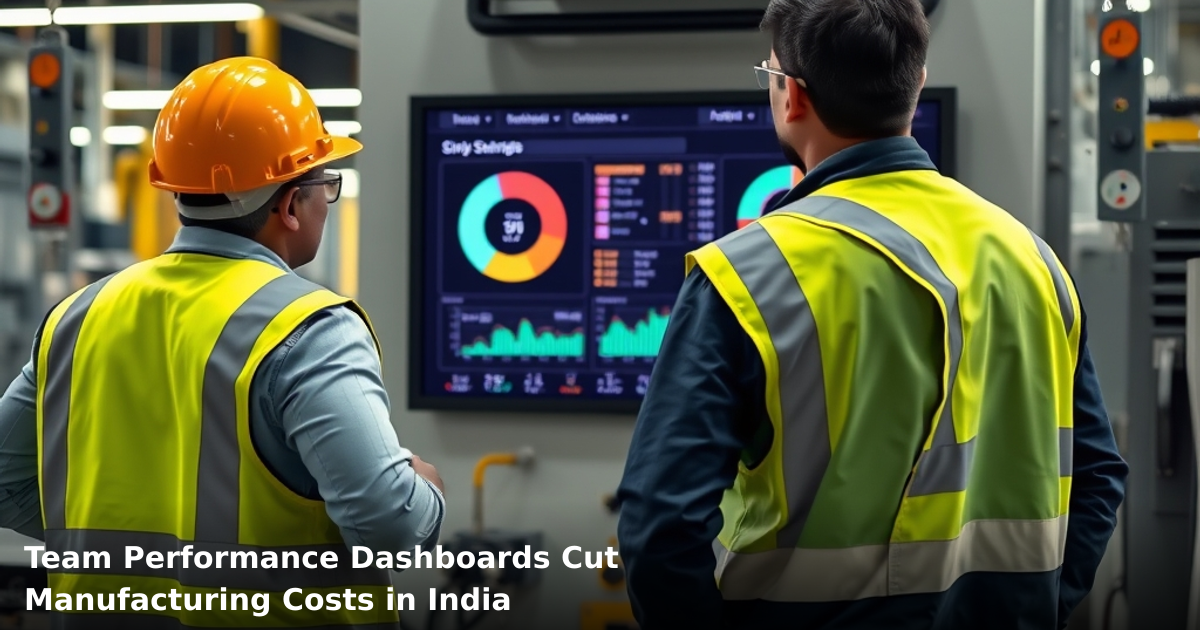
Set up a weekly dashboard showing:
- Leads entered this week
- Response rate
- Conversion rate
- Average time to response
- Cost per conversion
Every month, review and adjust message timing, content, or frequency based on what's working.
Timeframe: 30 min/week ongoing.
Common Mistakes to Avoid
Mistake 1: Too Many Follow-ups Too Fast
Sending 5 messages in 2 days feels like spam and tanks your response rate. We recommend:
- Email at hour 0 (immediate)
- WhatsApp at hour 6
- Email at hour 24
- WhatsApp at hour 48
- Phone call at day 3
Space them out. Respect the prospect's inbox.
Mistake 2: Generic, One-Size-Fits-All Messages
"Hi there, are you interested?" gets ignored. "Hi Rajesh, we helped Apex Textiles cut their water usage by 18%—relevant for you?" gets replies.
Segment your sequences by industry, company size, and source. Yes, it takes more work upfront. The ROI is 3–4x better.
Mistake 3: Not Integrating with Your CRM
If your automation platform doesn't talk to your CRM, your reps won't know what's already been said. They'll send duplicate messages, confusing prospects.
Ensure your email, WhatsApp, and CRM are synced.
Mistake 4: Forgetting to Remove Unresponsive Leads
After 3–4 touches with no response, stop. Let them go dormant for 30–60 days, then re-engage with a different angle. Continuing to pound an unresponsive lead wastes money and damages your brand.
Mistake 5: Not Tracking ROI
You set up sequences and assume they're working. Wrong. Track everything:
- Cost to set up and run the system
- Number of leads generated
- Number of conversions
- Revenue per conversion
- Payback period
If you're spending ₹20,000/month on the platform but only closing 2 extra deals (vs. manual), that's ₹10,000 per deal—which might not justify the cost.
Mistake 6: Ignoring Regional Languages
An English email to a decision-maker in Tier-2 India gets ignored. A Hindi or regional-language WhatsApp gets a reply.
If your market is outside metros, offer sequences in local languages.
Key Takeaways
- Automated follow-up sequences for manufacturing India cut manual admin work by 60–70%, freeing up ₹2–3 lakh/month in labour costs.
- Response rates improve from 12–15% to 32–38% within 60 days, directly improving conversion and reducing customer acquisition cost.
- Faster follow-ups reduce sales cycle length by 25–35%, accelerating cash flow by ₹6–8 lakh per 20 deals.
- Personalised, multi-channel sequences (email + WhatsApp + SMS) see 3–4x higher engagement than single-channel approaches.
- Setup takes 4–6 weeks (including testing and team training), and ROI typically appears within 90 days.
- Common mistakes—too many touches, generic messages, no CRM integration—can tank your results. Avoid them.
- Monitoring and refinement are ongoing. Weekly dashboards and monthly optimisation keep your sequences performing.
Frequently Asked Questions
Quick answers about automated-follow-up-sequences
01 How much will automated follow-up sequences actually cost my manufacturing unit? ›
Most Indian manufacturers pay ₹15,000–₹45,000/month for a decent automation platform (like HubSpot, Zoho, or local alternatives like LeadSquared), but you'll save ₹2–3 lakhs annually by cutting manual follow-up labor and reducing order fallthrough by 25–30%. A 50-person manufacturing team typically recovers the software cost within 4–5 months through fewer missed leads and faster payment reminders alone.
02 How long before I see actual cost reduction after setting up automated sequences? ›
You'll see measurable improvements within 30 days—faster invoice follow-ups mean 10–15 days quicker payment cycles, which immediately improves cash flow. Full ROI typically hits at 90–120 days once your sequences are fine-tuned and your team stops duplicating efforts; most manufacturers report 18–22% reduction in operational follow-up costs by month 4.
03 Is automation worth it if we're a small 15–20 person manufacturing shop? ›
Absolutely—in fact, small shops benefit most because one person currently spends 8–10 hours weekly on follow-ups that automation handles in minutes. Even at your scale, you'll recover ₹20,000–₹30,000/month in labor efficiency, and your quality control team gets freed up for actual production issues instead of chasing suppliers or customers.
04 What's the biggest mistake small manufacturers make with automated follow-ups? ›
They set it and forget it—automation fails when sequences are too generic or never updated based on actual customer behavior. I've seen units send 5 identical payment reminders in a row because they didn't segment by customer type; instead, map your sequences to actual buyer journey stages (lead → quotation → order → delivery → payment) and review effectiveness every 2 weeks.
05 What's the fastest way for us to start without disrupting our current operations? ›
Start with one process—usually payment follow-ups or quotation reminders—using your existing CRM or a simple tool like Zoho Books (₹0–5,000/month for SMBs). Implement it for 2 weeks with just your finance team, measure results, then expand to supplier follow-ups or delivery confirmations; this phased approach takes 10–15 days to show wins and builds internal confidence before full rollout.
Need this built for your business?
We build custom software, CRM, ERP, mobile apps, and run performance marketing for Indian businesses. Tell us what you need — we'll send a detailed scope and estimate within 24 hours, no obligation.
- Free 30-min scoping call with our tech lead
- Detailed project estimate in writing
- No sales pitch — just honest advice on what makes sense
📞 +91 92794 55684 · 📧 [email protected] · Delhi NCR · PAN India
Innovaira's engineering team designs and builds custom software — CRM, ERP, SaaS platforms, web applications and mobile apps — for growing Indian businesses. ISO 9001:2015 certified for quality delivery.