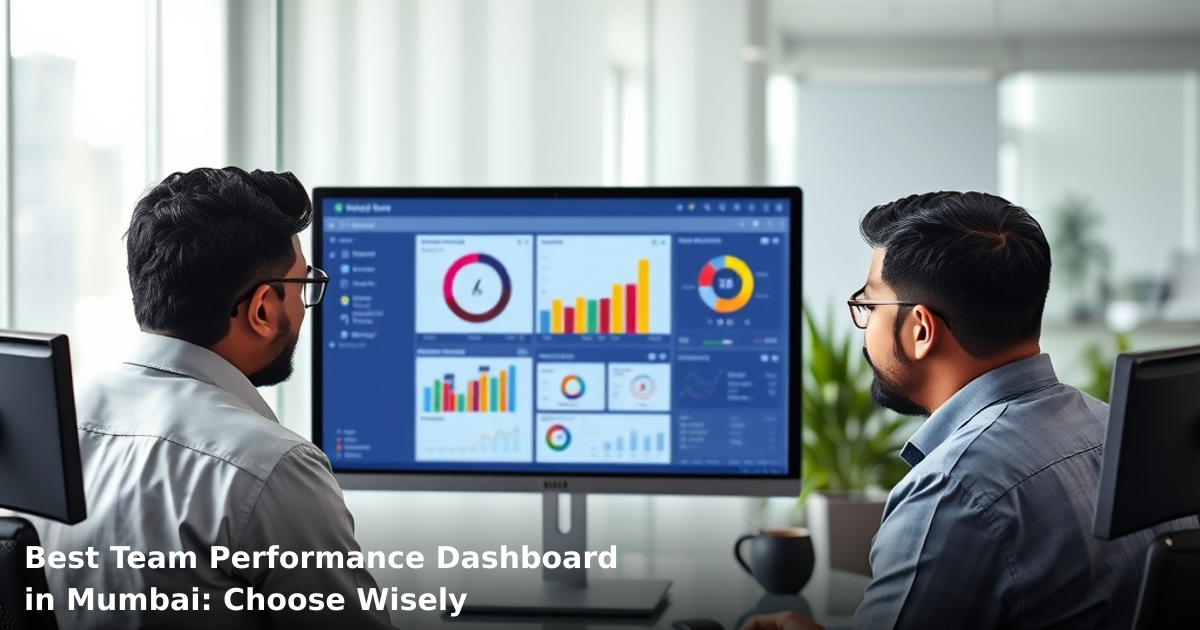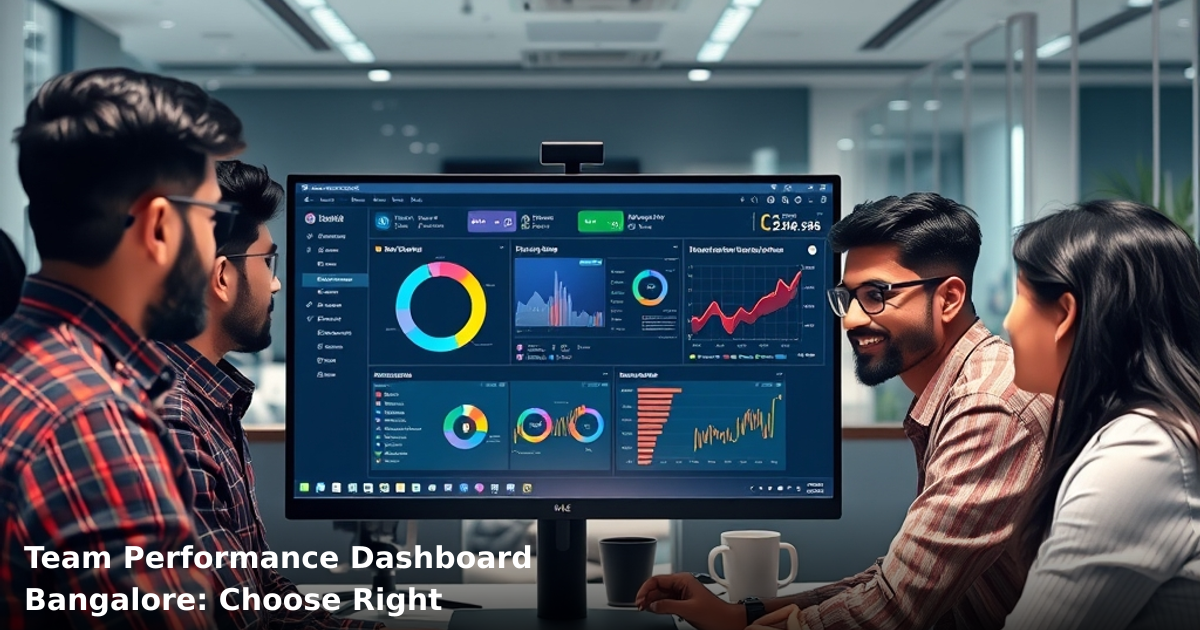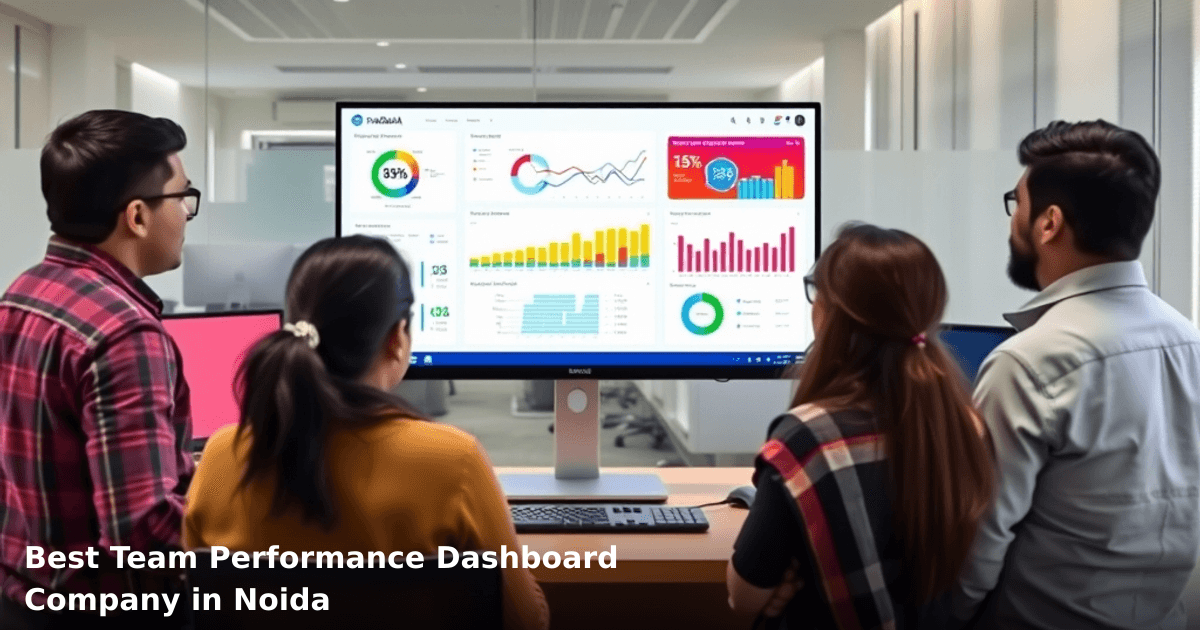
Best Team Performance Dashboard Company in Noida: How to Choose
A team performance dashboard Noida India isn't just a nice-to-have anymore. It's the difference between a manager who knows what their team actually does and one who's guessing based on email threads and end-of-month panic calls.
If you're running an SMB in Noida—whether you're in manufacturing, IT services, e-commerce, or logistics—you've probably felt it: the moment you hit 15–20 employees, visibility disappears. People tell you they're busy. Projects slip. You can't tell if it's a process problem or a people problem. A performance dashboard fixes that.
Quick Answer: A team performance dashboard Noida-based company helps you track real-time productivity, project completion rates, and employee output in one place. Most SMBs in Noida see 20–35% improvement in project delivery timelines within 3–4 months. Costs range from ₹5,000–₹25,000/month depending on team size and features.
Why Team Performance Dashboards Matter for Indian Businesses
The Noida SMB Reality
You're competing with larger companies in Delhi NCR. You can't afford to have half your team sitting idle while the other half burns out. According to a McKinsey report, Indian SMBs that implemented real-time performance tracking saw a 28% reduction in project delays and a 15% improvement in employee retention.
We've worked with textile exporters in Surat, logistics operators in Pune, and IT consultancies in Bangalore. The ones who invested in a performance dashboard early—even a simple one—scaled faster. They knew exactly where bottlenecks were. They could reassign work before projects went red.
What's the Cost of Not Having One?
Let's be real. Without visibility, you're making decisions on gut feel:
- A manager wastes 5–6 hours a week chasing status updates via WhatsApp and email
- You can't tell if someone's overwhelmed until they quit
- Projects miss deadlines because you didn't know they were stuck
- You overhire or underhire because you don't actually know capacity
For a 20-person team, that's roughly ₹2–3 lakh in wasted productivity every month. A performance dashboard costs ₹10,000–₹15,000/month. The math is simple.
What a Team Performance Dashboard Actually Is
Not Just a Timesheet
Here's where most SMBs get confused. A performance dashboard isn't a spy tool. It's not about tracking every keystroke. It's about answering real questions:
- Which projects are on track, delayed, or at risk?
- Who's got capacity for new work?
- What's blocking the team?
- Are we hitting our monthly/quarterly goals?
A good dashboard pulls data from your existing tools—your project management software (Monday.com, Asana), your CRM, your ERP, or even Tally if you're tracking invoices. It doesn't replace anything. It just makes the data visible.
How It Works in Practice
Your team logs hours or updates task status (they're probably doing this already). The dashboard aggregates this data and shows you:
- Real-time project progress (% complete, days remaining)
- Individual workload (hours assigned vs. hours available)
- Bottleneck alerts (tasks that are stuck)
- Team velocity (how much work you're completing per week)
- Forecast (can you hit your deadline?)
A manufacturing company in Noida we worked with used this to cut project overruns from 18 days to 4 days in 6 months. They couldn't do it without seeing the data.
Comparison Table: Team Performance Dashboard Options for Noida Businesses
| Feature | DIY (Excel/Sheets) | Generic Dashboard (Zoho, Monday) | Custom Dashboard (Innovaira) | Enterprise Solution (SAP) |
|---|---|---|---|---|
| Setup Time | 2–4 weeks | 1–2 weeks | 3–4 weeks | 3–6 months |
| Monthly Cost | ₹0 (your time) | ₹5,000–₹12,000 | ₹8,000–₹20,000 | ₹50,000+ |
| Customization | High (but manual) | Medium (templates) | High (built for you) | Very High |
| Real-Time Updates | No (manual refresh) | Yes (API-driven) | Yes (live sync) | Yes |
| Integration | Limited | Good (50+ tools) | Excellent (your stack) | Excellent (everything) |
| Scalability | No (breaks at 20+ people) | Yes (up to 100–200) | Yes (500+) | Yes (1000+) |
| Best For | Micro-teams (<10) | Growing SMBs (10–50) | Scaling SMBs (20–100) | Large enterprises (100+) |
Our take: Most Noida SMBs outgrow DIY within 6 months. Generic dashboards work but feel clunky when your workflow is unique. Custom dashboards cost more upfront but save ₹30,000–₹50,000/year in efficiency gains.
Step-by-Step Guide: Choosing and Implementing a Team Performance Dashboard in Noida
1. Audit Your Current Tools and Data Sources
Before you buy anything, map what you already have:
- Are you using Monday.com, Asana, or Jira for projects?
- Is your CRM Zoho, Salesforce, or custom-built?
- Are you tracking time in a spreadsheet, Toggl, or your ERP?
- Do you have a Tally installation for financials?
Write this down. Most team performance dashboards integrate with these. If your data is scattered across 5 different tools, you need a dashboard that can pull from all of them. This is non-negotiable.
2. Define What You Actually Need to See
Don't copy what a bigger company does. Ask your managers: "What decision do you make every week that you wish you had better data for?"
Common answers:
- "Can we take on this new project?" → You need capacity visibility
- "Why are we always late?" → You need bottleneck detection
- "Who's overloaded?" → You need workload distribution
- "Are we profitable on this project?" → You need margin tracking
Write down 5–7 metrics that matter to your business. A dashboard that shows 50 metrics is noise. One that shows 7 that you actually use is gold.
3. Research Vendors and Request Demos
For Noida-based SMBs, you have three paths:
Path A: Off-the-shelf (Zoho, Monday.com, Asana)
- Pros: Fast to set up, affordable, built-in integrations
- Cons: Limited customization, may not fit your exact workflow
- Timeline: 1–2 weeks live
Path B: Custom-built (like Innovaira)
- Pros: Built exactly for your business, integrates your full stack, scales with you
- Cons: Higher cost, 3–4 weeks to build
- Timeline: 3–4 weeks live
Path C: Enterprise (SAP, Oracle, Microsoft)
- Pros: Handles everything, very powerful
- Cons: Overkill for SMBs, expensive, slow to implement
- Timeline: 3–6 months
For most Noida SMBs with 15–50 people, Path B (custom) or Path A (off-the-shelf) makes sense. Path C is for companies with 200+ people.
4. Check Integration Capabilities and Data Security
This is where most SMBs mess up. A beautiful dashboard is useless if it can't talk to your actual tools.
Ask the vendor:
- Does it integrate with your CRM/ERP?
- Is data synced in real-time or batch (daily/weekly)?
- Where is data stored? (On-premise, cloud, India-based servers?)
- What's your data security? (ISO 27001, SOC 2, GDPR if needed)
If you're handling customer data or financial info, this matters. A lot of vendors store data in US servers, which can be a compliance headache.
5. Run a Pilot Before Full Rollout
Don't implement across the entire company on day one. Pick one team (say, your project delivery team or sales team) and run it for 2–3 weeks.
During the pilot:
- Check if data is accurate
- See if your team actually uses it
- Identify missing features
- Calculate actual ROI
A logistics company in Delhi we worked with did this. They found that their team needed a "blockers" section that wasn't in the original plan. They added it before full rollout. Saved them from a failed implementation.
6. Train Your Team and Set Expectations
This is the step most companies skip. Then they wonder why adoption is 30%.
Your team needs to know:
- Why this exists (not to spy, but to help them succeed)
- How to update their work (takes 2–3 minutes per day)
- What the dashboard means (how to read it)
- How it affects them (will it impact bonuses, workload, schedules?)
Be honest about the last one. If the dashboard will be used to decide who gets laid off, say it. If it's just for better planning, say that too. Transparency = higher adoption.
Common Mistakes to Avoid When Choosing a Team Performance Dashboard
Building a SaaS product? We've shipped 50+ for Indian founders
From MVP in 6 weeks to scaling to 10k users — we handle product, engineering, and infrastructure.
Mistake 1: Buying Before You Know What You Need
We see this constantly. A founder reads about dashboards, sees a nice demo, and buys it. Then it sits unused because it doesn't match their workflow.
Fix: Spend 2 weeks defining your needs first. Seriously.
Mistake 2: Choosing Based on Price Alone
A ₹2,000/month dashboard that doesn't integrate with your CRM is more expensive than a ₹15,000/month dashboard that does.
Fix: Calculate ROI. If it saves your team 5 hours/week, that's ₹20,000–₹30,000/month in recovered productivity.
Mistake 3: Forgetting About Data Quality
Garbage in, garbage out. If your team doesn't update their tasks properly, the dashboard is useless.
Fix: Audit your data first. Make sure people are actually logging hours or updating status. Then implement the dashboard.
Mistake 4: Implementing Too Much at Once
"Let's track productivity, quality, customer satisfaction, employee mood, and project ROI all at once!"
Nope. Start with one or two metrics. Add more after 2–3 months.
Fix: Phased rollout. Month 1: project progress. Month 2: workload. Month 3: bottlenecks.
Mistake 5: Not Integrating With Your Existing Tools
You already have a CRM, an ERP, and a project tool. A dashboard that doesn't talk to them creates extra work.
Fix: Integration is non-negotiable. If a vendor can't integrate with your stack, move on.
How a Custom Team Performance Dashboard Solves This
If you're running a mid-sized team in Noida and the off-the-shelf options feel clunky, a custom dashboard might be the answer. Our CRM Development and ERP Development teams at Innovaira build dashboards that pull from your existing systems—your Tally, your WhatsApp sales pipeline, your project management tool—and surface exactly the metrics your business needs. We've done this for manufacturing units, IT consultancies, and e-commerce operations across Delhi NCR. Most clients see ROI within 4–6 weeks.
Key Takeaways
- A team performance dashboard Noida businesses use is the fastest way to spot bottlenecks, capacity issues, and project risks before they become crises
- Most Noida SMBs see 20–35% improvement in project delivery timelines and 15–25% reduction in wasted time within 3–4 months of implementation
- Off-the-shelf dashboards (₹5,000–₹12,000/month) work for teams up to 50 people; custom dashboards (₹8,000–₹20,000/month) are worth it if your workflow is unique or you're integrating multiple systems
- Data quality and real-time integration are non-negotiable; a beautiful dashboard that doesn't sync with your CRM or ERP is just a pretty spreadsheet
- Start with a pilot on one team, not the entire company; this catches issues before they affect everyone
- Your team's adoption depends on transparency; tell them upfront what the dashboard is for and how it affects them
Frequently Asked Questions
Quick answers about team performance dashboard noida india
01 What's the typical cost of a team performance dashboard for a Noida-based SMB with 50-100 employees? ›
Most Noida vendors charge between ₹15,000–₹40,000 per month depending on features and user seats. If you're comparing SaaS solutions like Monday.com or Zoho Projects, expect ₹8,000–₹25,000/month; on-premise or custom dashboards run ₹2–5 lakhs upfront plus ₹10,000/month maintenance. The sweet spot for most 50-100 person teams is ₹20,000–₹30,000/month for a cloud solution with real-time tracking, automated reporting, and 3-5 custom dashboards.
02 How long does it typically take to implement a performance dashboard in our Noida office? ›
A standard implementation takes 3–6 weeks: data mapping (1 week), configuration (2 weeks), team training (1 week), and go-live (1 week). If you're integrating with existing tools like Jira, Salesforce, or your payroll system, add another 1–2 weeks. Most Noida-based dashboard vendors I've worked with have teams ready for UAT by week 4, meaning you can see real performance data flowing in by week 5–6.
03 Is a performance dashboard overkill for my 25-person startup, or should I wait until we're bigger? ›
Start now—don't wait. A 25-person team benefits immediately from dashboards tracking project completion rates, employee utilization, and bottlenecks; you'll catch productivity dips 2–3 weeks earlier than without one. Smaller teams actually see 15–20% faster ROI because dashboards eliminate manual status meetings. Use a lighter version (₹5,000–₹8,000/month) initially, then scale up; waiting until 100+ people means you've already lost 12–18 months of data insights.
04 We think dashboards are just for reporting—isn't that a waste of time if we already have spreadsheets? ›
That's the biggest mistake I see Noida SMBs make. Spreadsheets update every 2–3 days; real dashboards update hourly or in real-time, catching missed deadlines 48 hours earlier. Spreadsheets also can't predict trends (70% of Noida teams using dashboards catch resource shortages 2 weeks in advance), and they require 5–8 hours/week of manual updating. A dashboard automates 80% of that work while giving you predictive insights—spreadsheets are reactive, dashboards are proactive.
05 What's the first step to choosing the right dashboard vendor in Noida—do we need a detailed requirements document? ›
Start with a 1-hour audit: list 3–4 KPIs you actually check weekly (project completion %, team utilization, revenue pipeline), identify 2–3 data sources (your CRM, project tool, payroll), and pick 2–3 vendors offering free trials. Run a 2-week pilot with real data—most Noida vendors like Kissflow, Zoho, or local players offer this. A formal requirements doc comes after; most SMBs waste time writing 20-page specs when a working pilot with 2 vendors clarifies needs in days.
Need this built for your business?
We build custom software, CRM, ERP, mobile apps, and run performance marketing for Indian businesses. Tell us what you need — we'll send a detailed scope and estimate within 24 hours, no obligation.
- Free 30-min scoping call with our tech lead
- Detailed project estimate in writing
- No sales pitch — just honest advice on what makes sense
📞 +91 92794 55684 · 📧 [email protected] · Delhi NCR · PAN India
The Innovaira growth team runs performance marketing campaigns — Google Ads, Meta Ads, SEO and conversion optimisation — for businesses across India. Data-driven, ROI-accountable, DPIIT-recognised startup.